



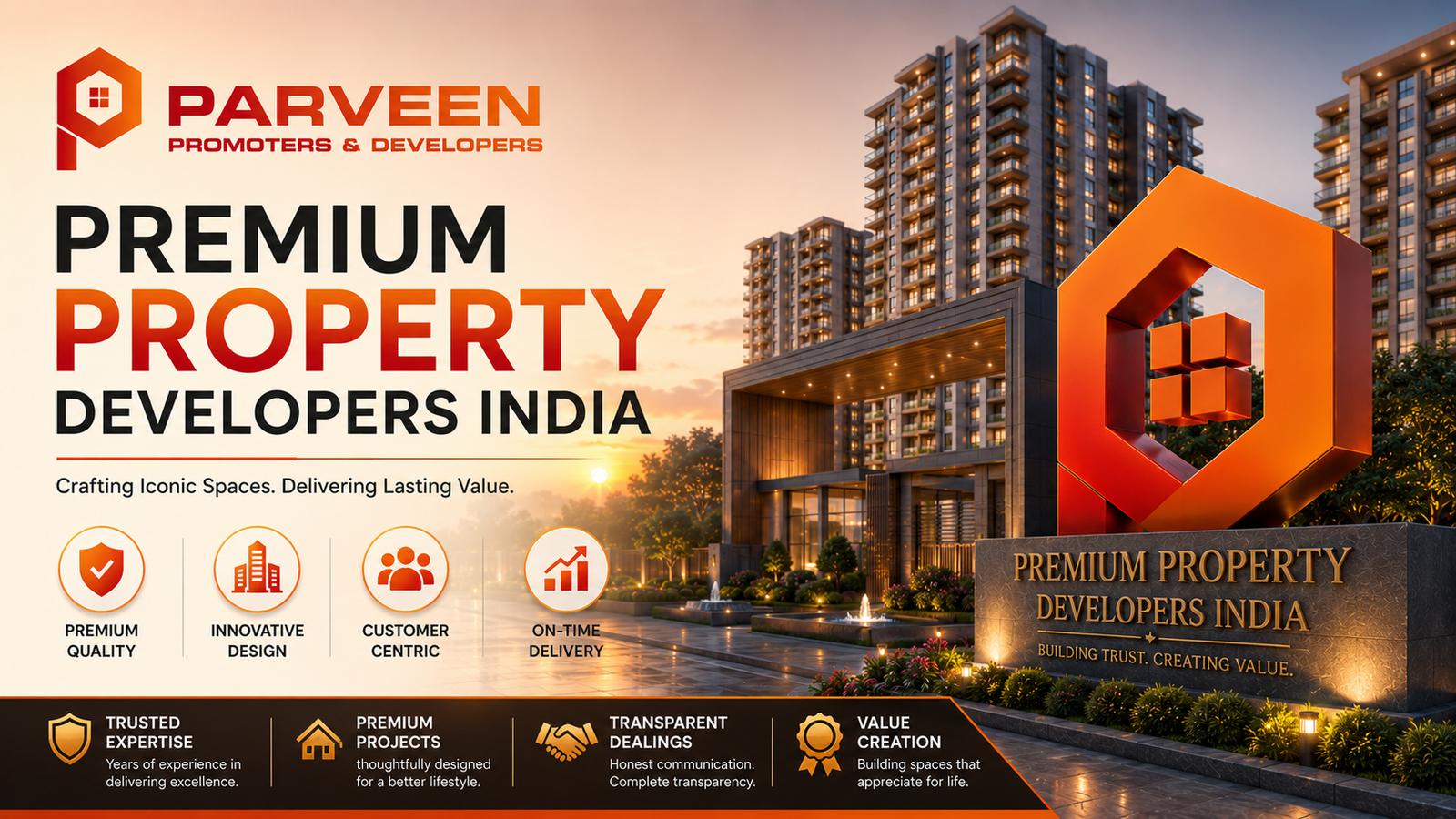
Over the past ten years, India’s real estate market has undergone substantial change. Today’s buyers are seeking for more than just a property with appealing architecture and a prime location. They are looking more and more for well-thought-out projects that provide high-quality construction, contemporary conveniences, robust connectivity, security, sustainability, and long-term value. The role of Premium Property Developers India in influencing the nation’s residential and commercial landscape has grown as a result of this shifting demand.
Property development is shifting toward a more integrated strategy from large cities to developing urban centers. The lifestyle, convenience, and investment demands of contemporary purchasers are being taken into consideration when designing contemporary projects. Better planning, higher construction standards, effective infrastructure, and amenities that support a full living and working experience are the main priorities for developers.
Understanding Premium Property Development
Building esthetically pleasing structures is only one aspect of premium real estate development. In order to create a coherent development, it is necessary to integrate location, planning, design, construction quality, infrastructure, amenities, and long-term usability.
Usually, a premium development starts with a thorough assessment of the site. The property’s usage and future potential may be impacted by its proximity to major thoroughfares, commercial districts, educational institutions, healthcare facilities, retail locations, and recreational places.
Planning is just as crucial. Effective layouts, open areas, parking, pedestrian flow, landscaping, security, utilities, and community facilities must all be taken into account by developers. Rather than only satisfying current market demand, the goal is to design a development that will continue to be useful and appealing for many years.
Why Quality Matters in Modern Real Estate
One of the key elements that distinguishes low-end projects from high-end ones is construction quality. When buying residential or commercial real estate, buyers are making large financial commitments, therefore quality and durability are crucial factors.
Carefully chosen materials, trustworthy engineering techniques, suitable structural planning, competent project management, and attention to finishing details can all contribute to high-quality building. Every element of a development, from foundations and structural systems to electrical, plumbing, flooring, doors, windows, and common areas, adds to its overall quality.
Buyers and investors are more likely to trust a developer that upholds uniform standards throughout the project. Better long-term usability and less maintenance needs can also be attributed to quality.
Location and Connectivity
One of the biggest factors influencing real estate value is still location. A well-thought-out project in a strategically located place may provide more practical benefits than a well-designed property in a poorly linked neighborhood.
Therefore, accessibility and the surrounding infrastructure are important considerations for premium developers. A development may be more appealing to investors and end users if it is close to major thoroughfares, airports, commercial centers, schools, hospitals, retail establishments, and public utilities.
When infrastructure is improved and urban growth is encouraged, emerging places can also offer opportunity. Areas with better connections and planned development may see an increase in residential and commercial activity as cities expand outward.
Therefore, it is equally crucial for buyers to comprehend the development potential of the surrounding neighborhood as it is to evaluate the property itself.
Modern Amenities for Contemporary Lifestyles
Buyers of real estate now have quite different expectations. More people now consider a home to be more than just a physical building; it’s a whole lifestyle situation.
Landscaped areas, fitness centers, recreational areas, communal spaces, parking options, security systems, kid-friendly activity zones, and other lifestyle-focused features may be included in contemporary luxury complexes.
Carefully planned common areas in residential buildings can promote community engagement while offering inhabitants practical venues for leisure and relaxation. Well-designed amenities in commercial buildings can enhance the experiences of companies, workers, clients, and guests.
The significance, usability, quality, and integration of the amenities into the development as a whole are more important than just their quantity.
Technology in Premium Real Estate
Technology is playing a more and bigger role in contemporary real estate development. Convenience and efficiency can be increased with smart home systems, automatic lighting, access control, surveillance, energy monitoring, climate control, and linked equipment.
Technology can help with property management and security as well. An environment can be made more organized with the use of integrated security infrastructure, automated parking systems, visitor management programs, and digital access systems.
But technology should be used carefully. Instead of incorporating technology only for marketing, a premium project should concentrate on useful solutions that offer true value.
Technology-enabled residences will probably become more appealing to customers looking for convenience and contemporary utility as digital lifestyles continue to grow.
Sustainability and Responsible Development
In the real estate sector, sustainability has grown in importance. Developments that use resources sustainably and take long-term environmental impact into account are becoming more and more appealing to buyers, investors, businesses, and communities.
Energy-efficient lighting, water-saving technologies, rainwater management, landscaping, natural ventilation, effective waste management, and environmentally friendly materials can all be included in high-end projects.
Operational efficiency can also be enhanced by sustainable planning. In addition to improving passenger comfort, lower energy and water usage may assist manage operating expenses over time.
Therefore, responsible development is more than just an environmental goal. Additionally, it can enhance a property’s long-term economic performance and functioning.
Residential Developments and Changing Buyer Expectations
The residential market in India has grown more varied. First-time homebuyers, families, professionals, NRIs, business owners, and investors are among the buyers. Although the demands of each segment may differ, quality and convenience are becoming more and more important.
Floor plans, ventilation, natural light, parking, security, amenities, location, neighborhood infrastructure, upkeep, and potential expansion are just a few of the elements that contemporary home purchasers frequently consider.
High-end residential projects make an effort to better plan and design in order to meet these needs. Long-term residents may find a property more appealing if it has large floor plans, beautifully landscaped surroundings, community amenities, and easy access to necessary services.
The neighborhood’s quality is also important. When schools, healthcare, retail, entertainment, job centers, and robust transportation networks are present, a well-planned development can increase its value.
Commercial Real Estate and Business Opportunities
Residential real estate is not the only type of premium development. Another crucial market where success may be greatly impacted by quality and strategy is commercial real estate.
Visibility, accessibility, parking, customer movement, infrastructure, and surrounding economic activity must all be carefully considered when designing office spaces, retail locations, showrooms, mixed-use developments, and other commercial buildings.
Location has a direct impact on customer access and operational convenience for firms. A well-designed commercial space can offer an atmosphere that promotes client satisfaction, branding, and company expansion.
When assessing commercial real estate, investors may also take into account long-term demand, nearby development, occupancy forecasts, and rental potential.
Professionally managed commercial developments can be crucial in promoting economic growth as Indian cities continue to grow and new business hubs appear.
The Role of Infrastructure in Property Value
Real estate development and infrastructure are strongly related. The usability and appeal of a location can be affected by roads, transportation networks, utilities, drainage, energy, water supply, communication infrastructure, and other public facilities.
Development patterns can also be altered by large-scale infrastructural initiatives. Businesses and locals may relocate to previously developed areas as a result of improved highways, airports, metro networks, industrial corridors, and commercial centers.
Because of this, prospective upgrades and more general development patterns should be considered in addition to the current infrastructure.
A developer who is knowledgeable about urban growth and infrastructure may be able to pinpoint areas that have promising long-term prospects.
Transparency and Trust in Real Estate
Transparency is crucial to the buyer-developer relationship since real estate transactions require significant financial commitments.
Before making a choice, buyers should thoroughly go over project details, agreements, permissions, payment plans, specifications, possession promises, maintenance clauses, and other pertinent paperwork.
Uncertainty may be decreased and the purchasing process made more comprehensible with clear communication. Throughout the purchasing process, professional developers should strive to deliver precise project details and keep regular communication.
Over time, trust is developed via ethical behavior, high-quality products, customer service, and the capacity to fulfilll obligations.
Importance of Developer Experience
When assessing a real estate developer, experience might be a useful factor. Developers may have a better grasp of planning, construction, approvals, project management, and client expectations if they have expertise with a variety of projects and market situations.
However, real project execution should be considered in addition to experience. Purchasers have access to information about finished projects, project locations, construction quality, available paperwork, client testimonials, and the developer’s overall performance history.
A developer’s approach to many projects and the consistency of their standards can be gleaned from a solid portfolio.
Investing in Indian Real Estate
For many Indian investors, real estate continues to be a significant asset class. Long-term appreciation, rental income, business use, and portfolio diversification are all possible advantages of residential and commercial real estate.
But investing in real estate necessitates thorough investigation. Location, demand, infrastructure, property type, developer credibility, legal documents, market conditions, financing costs, taxes, maintenance, and exit potential are all factors that investors should take into account.
The appearance or facilities of a premium property shouldn’t be the only factors considered. In terms of location, pricing, demand, and long-term prospects, the investment case should also make sense.
Investors who require assistance with legal, financial, or tax-related aspects of a transaction may benefit from professional advice.
Opportunities Beyond Major Metropolitan Cities
India’s real estate sector is expanding outside of its usual metropolitan areas. New residential and commercial development can be drawn to cities and areas with developing infrastructure, expanding enterprises, increased employment possibilities, and improved connectivity.
Northern Indian markets, such as those in the vicinity of Chandigarh, Mohali, and other growing cities, serve as examples of how regional expansion can open up new real estate development prospects.
Planned infrastructure, growing residential demand, business activity, and connectivity to major economic hubs can all be found in these markets.
Because development potential might differ greatly between locales, buyers and investors must conduct thorough research in emerging markets. Before making a purchase, it is important to evaluate the infrastructure quality, developer track record, local demand, and future growth plans.
What Buyers Should Look for in a Premium Developer
Selecting the best developer necessitates a methodical approach. Before choosing a property, buyers can consider a number of crucial aspects.
Look at the developer’s performance history and finished projects first. This can shed light on delivery procedures, planning requirements, and building quality.
Secondly, assess the site and the infrastructure around it. Important services and transportation networks should be easily accessible from a high-end residence.
Third, carefully go over the construction materials and project parameters. Recognize the contents of the shared areas and the property.
Fourth, review the documents and approvals. It is important for buyers to make sure that all applicable legal and regulatory standards are met.
Lastly, think about maintenance plans and post-purchase assistance. Possession is not the end of a property’s experience. Long-term satisfaction can be impacted by efficient upkeep and customer service.
Future Trends in Indian Property Development
Technology, sustainability, shifting demographics, infrastructure growth, and changing consumer expectations are all likely to have an impact on Indian real estate in the future.
As automation and linked gadgets become more widely available, smart homes are predicted to proliferate. As consumers prioritize operating expenses and environmental responsibility, energy efficiency will also become increasingly crucial.
By combining residential, business, retail, and recreational facilities closer together, mixed-use complexes could become more significant. These advancements can make urban areas more convenient and lessen the need for travel.
Additionally, as companies adjust to evolving work habits, flexible commercial spaces may become more crucial. Developers must comprehend how businesses utilize retail establishments, offices, and other commercial locations.
Buyers will still prioritize long-term value, transparency, construction quality, and location.
Making an Informed Property Decision
Purchasing real estate is a big decision that needs to be done carefully and patiently. Although eye-catching architecture or promotional materials can make a first impression, consumers should investigate the project’s core principles.
Determine the purchase’s purpose first. A residence intended for personal use could need different features than a commercial or investment property.
Next, contrast sites, costs, features, connectivity, building standards, developer repute, and possibilities for future growth.
Additionally, it’s critical to thoroughly examine all supporting papers and comprehend the associated financial commitment. In addition to the purchase price, buyers should think about the costs of registration, financing, upkeep, taxes, and other related charges.
Buyers can discern between true long-term value and short-term attractiveness with the use of a methodical evaluation approach.
Conclusion
Selecting the appropriate developer is crucial when making real estate investments. Through superior construction, key locations, creative designs, and sustainable development, Premium Property Developers India are contributing to the growth of contemporary real estate. Assessing location, developer reputation, amenities, documentation, and long-term worth can assist investors and buyers make a secure real estate choice.
Recommended to read:
Comments are closed